
Domestic
Commercial

Clear, honest condition reports for homeowners, landlords and businesses, by qualified inspectors who explain the results and can fix what they find.
An EICR, Electrical Installation Condition Report, is a structured inspection of your property’s fixed wiring: the consumer unit, circuits, sockets, switches and earthing. It’s how you know, rather than hope, that an installation is safe. For landlords it’s the law. For buyers and homeowners it’s the difference between a surprise and a plan.
A qualified inspector tests the installation against BS 7671, the national wiring standard, checking for deterioration, defects, and departures from current requirements. You receive a formal report grading the installation satisfactory or unsatisfactory, with every observation coded by severity. It is a health check, not a sales pitch, a good EICR tells you what’s fine as clearly as what isn’t.

Since the Electrical Safety Standards in the Private Rented Sector (England) Regulations 2020, every rented home in England must have a satisfactory EICR renewed at least every five years, with copies supplied to tenants and, on request, the local authority. Penalties reach £30,000.

Guidance recommends testing owner-occupied homes every ten years, and sooner if you’re buying (surveys rarely examine electrics properly), renovating, or noticing symptoms like tripping and flickering.

Commercial premises need periodic testing under the Electricity at Work Regulations; insurers increasingly require an in-date report.
None of these automatically means a full rewire, an inspection first tells you honestly what you’re dealing with, and sometimes a partial rewire or board change is the right answer. We’d rather quote you the smaller job you need than the bigger one you don’t.
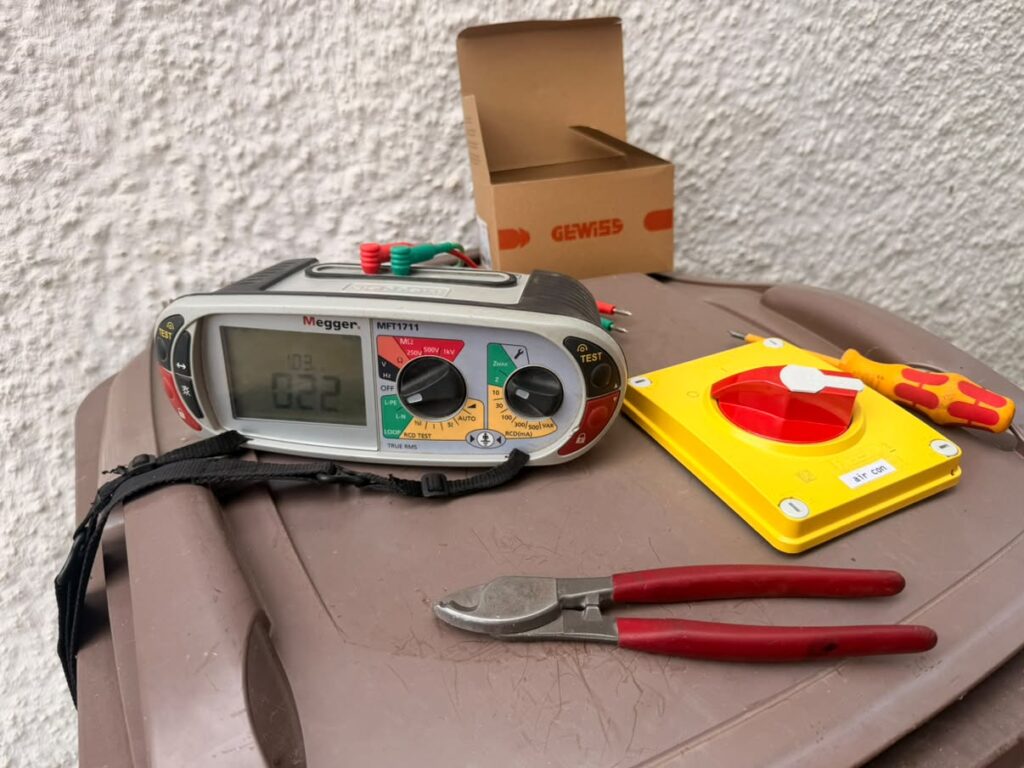
Consumer unit condition and protective devices; earthing and bonding arrangements; a sample (or full set) of accessible sockets, switches and fittings; circuit continuity, insulation resistance and RCD trip times; and signs of overheating, damage or amateur alterations. A typical 3-bed home takes 2–4 hours.
Immediate risk. We make it safe before we leave, always.
Must be remedied for a satisfactory report.
Doesn’t fail the report; worth knowing about.
Something needs deeper examination.
We go through every observation with you in plain English. You will never get a report tossed over the fence with a shrug.

An unsatisfactory report isn’t a crisis; it’s a to-do list. We provide an itemised remedial quote, priced per observation so you can see exactly what each fix costs, and compare us if you wish. Most remedials are completed within days, followed by the certification that closes the loop. Landlords: we can often complete minor remedials during the inspection visit itself, saving a second appointment.

You’ll see national websites advertising EICRs “from £79”. What that buys is often an unknown subcontractor, a race through the sample, and a report engineered to generate remedial work. Our inspections are done by our own inspectors, take the time the standard requires, and our remedial quotes are itemised precisely so you can challenge or compare every line. Cheap tests are the most expensive kind.
Two to four hours for a typical home, longer for large or complex installations. Power is off intermittently during testing.
You get an itemised remedial quote with no obligation. C1 dangers are made safe on the day regardless, we won’t leave a live hazard behind.
At least every five years, at change of tenancy if the report requires it, and a copy to tenants within 28 days of the inspection.
Not legally, but buyers’ solicitors increasingly ask, and a satisfactory report removes a common renegotiation lever. It’s cheap insurance on your asking price.
An EIC certifies *new* work when installed; an EICR assesses the *condition* of an existing installation. Selling agents and solicitors mix these up constantly, we’ll supply whichever your situation actually needs.
Routinely. Give us the agent’s details and we’ll handle access, keys and certificate delivery end to end.